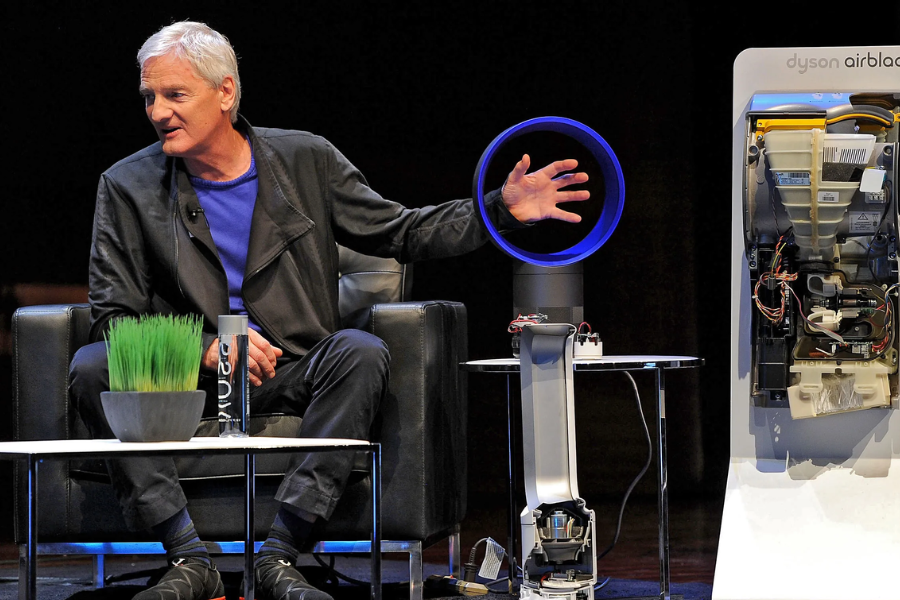
The inventor who revolutionized everyday technology is James Dyson
James Dyson is one of the most revered and respected names in modern engineering. Dyson has established himself as a global symbol of innovation, perseverance, and imaginative design. He is credited with redefining vacuum cleaners and household innovation. His journey, from his humble beginnings in rural England to the creation of a global brand worth multiple billions of dollars, is a testament to the power of creativity, perseverance, and unwavering faith in one’s ideas. This article takes a deep dive into the life, career, and legacy of James Dyson — exploring how one man’s obsession with problem-solving turned frustration into fortune.
Early Life and Background
James Dyson was born in Cromer, Norfolk, England, on May 2, 1947. Dyson was raised in a middle-class family, and he was always curious and creative. Alec Dyson, his teacher father, taught him the importance of education and perseverance. Tragically, Dyson’s father passed away when he was still a young boy. This was a tragic event that had a profound effect on Dyson and gave him a strong sense of independence. Dyson excelled at Gresham’s School in Holt because of his determination and resourcefulness rather than his academic excellence. He once admitted that although he wasn’t the smartest student in class, he could always “keep going longer than anyone else.” This endurance would later define his engineering journey.
He went to the Royal College of Art in London to study furniture and interior design after graduating from high school. However, his interest quickly shifted to engineering and industrial design—the intersection of creativity and practicality.
The Spark of an Inventor
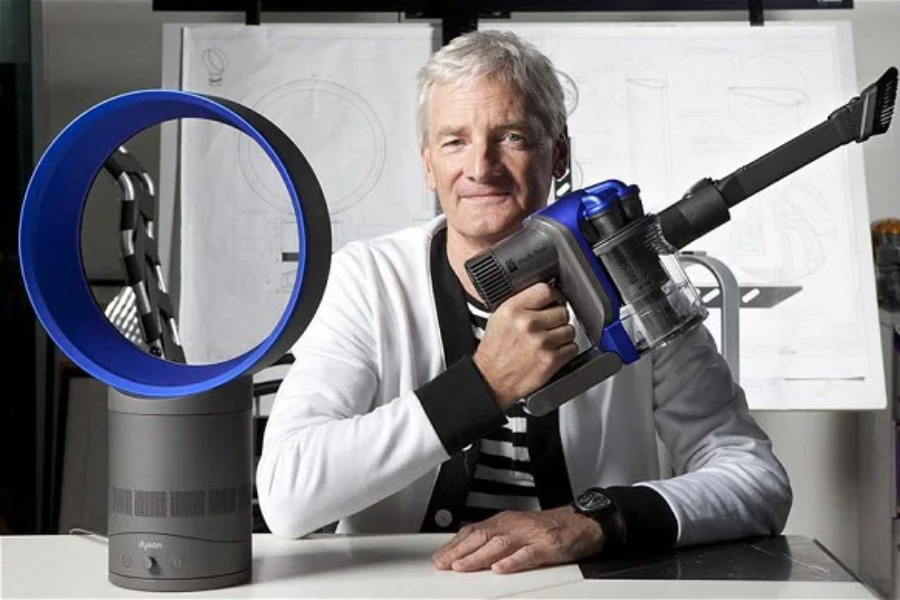
Dyson’s collaboration with Rotork founder and innovative designer Jeremy Fry sparked his interest in invention. Dyson was taught by Fry how to combine creative thinking with mechanical precision. He was especially interested in how engineering could make everyday life better. The Sea Truck, a high-speed, flat-bottomed watercraft used to transport vehicles and goods, was one of his first major projects. It gave Dyson valuable experience in problem-solving, design, and material innovation and won several design awards. However, Dyson’s real aha moment would come from the dust in his house, not the sea.
The Birth of the Bagless Vacuum Cleaner
Dyson had a simple but annoying issue toward the end of the 1970s: his vacuum cleaner kept losing suction. Instead of buying a new one, he decided to take it apart. He was dissatisfied with what he found because traditional vacuum cleaners used bags that clogged quickly and reduced performance. Inspired by a sawmill’s industrial cyclone technology that separated dust from air, Dyson had an idea: why not use the same principle in a vacuum cleaner?
Using tape, spare parts, and cardboard, he constructed his initial prototype. At least in theory, it worked. However, perfecting it was a different matter. In the following five years, Dyson would produce 5,127 prototypes before developing a design that was fully functional. That number has since become legendary — a symbol of persistence and innovation.
Dyson approached major manufacturers once he had the design perfected. He was disappointed when they all turned down his idea. They feared it would threaten their profits from selling replacement vacuum bags.
However, Dyson did not give up.
Founding Dyson Ltd
In 1991, after years of rejection, James Dyson founded his own company — Dyson Ltd — to bring his revolutionary vacuum cleaner to market. The first product, the Dyson DC01, launched in the UK in 1993. It was the first bagless vacuum cleaner in the world, and it had Dyson’s patented Dual Cyclone technology, which kept the suction constant. In contrast to the drab machines of its rivals, the cleaner was not only efficient but also beautifully designed. It was bright, bold, and futuristic. Dyson believed that aesthetically pleasing products could also be useful. Dyson Ltd. rose quickly to become one of the UK’s fastest-growing technology companies. Overseas, the product’s popularity skyrocketed, particularly in Japan, where the innovative designs of Dyson were hailed as stylish and effective.
Overcoming Early Challenges
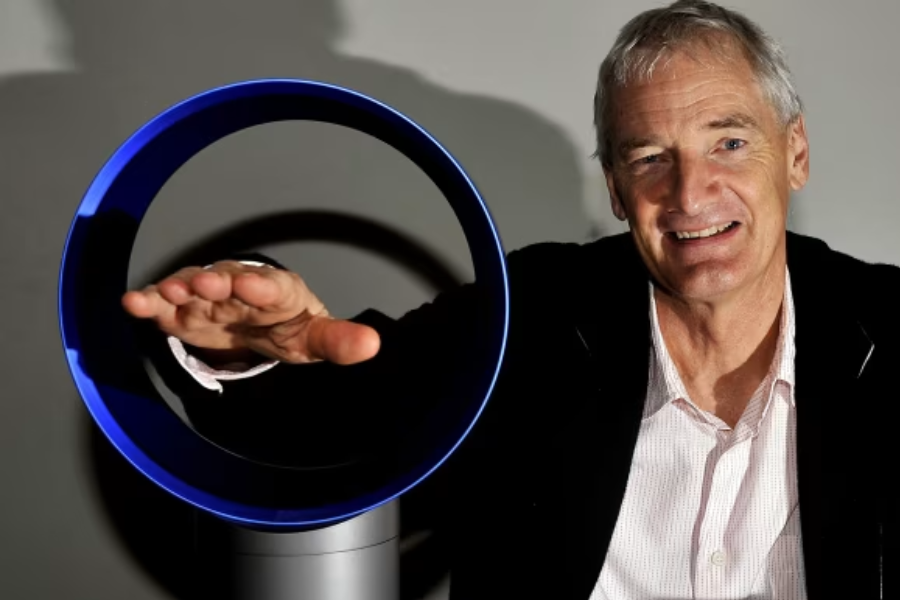
Dyson didn’t have an easy road to success. He encountered numerous obstacles, including legal disputes with rivals and investors who were skeptical. He mortgaged his home to fund his prototypes and lived frugally during the company’s early years. Yet his belief in the value of innovation never wavered.
Dyson’s rivals attempted to replicate his technology at one point. He took them to court and won, determined to defend his work. This victory not only protected his inventions but also established him as a fierce advocate for intellectual property rights, a cause he continues to champion today.
Innovation Beyond Vacuums
After revolutionizing the vacuum cleaner industry, Dyson expanded his creative vision to other everyday appliances. His team developed new designs that combined elegant engineering with cutting-edge technology. Among the most notable inventions:
- Dyson Airblade Hand Dryer
- Introduced in 2006, this high-speed hand dryer uses a thin sheet of air to remove water from hands in seconds — far faster and more hygienic than traditional dryers.
- Dyson Supersonic Hair Dryer
- Launched in 2016, the Supersonic uses a digital motor to produce powerful airflow while preventing extreme heat damage. It became a luxury product adored by stylists and consumers alike.
- Dyson Air Multiplier (Bladeless Fan)
- Another iconic innovation, this fan circulates air without visible blades, providing a sleek, safe, and energy-efficient cooling experience.
- Dyson Purifiers and Humidifiers
- With growing concern over indoor air quality, Dyson entered the air purification market with smart devices capable of detecting and removing pollutants.
Through each product, Dyson reinforced his mission: to solve problems others ignored using science, design, and persistence.
Design Philosophy: Function Meets Beauty
A straightforward yet profound design philosophy, “Solve real problems and make things work better,” lies at the heart of Dyson’s success. Dyson addresses the issue first, as opposed to businesses that prioritize aesthetics or trends. His design teams study materials, look for inefficiencies, and test prototypes for years. Not only must every product perform better than the competition, but it also needs to look good. Dyson believes that engineering and design are inseparable. He argues that consumers’ rational and emotional sides must be satisfied by a good product. His designs are supported by scientific rigor and combine human-centered usability, performance, and minimalism.
Education and the Dyson Institute
James Dyson established the James Dyson Foundation in 2002 because he was of the opinion that cultivating young minds is essential for the future of innovation. Scholarships and resources to encourage students’ creativity are provided by the foundation, which helps design and engineering education around the world. He opened the Dyson Institute of Engineering and Technology in Malmesbury, United Kingdom, in 2017. The institute follows a novel model in which students earn degrees while working alongside Dyson engineers on real-world projects and gaining practical experience. Dyson personally invests millions into this initiative, proving his commitment to the next generation of inventors.
Global Expansion and Business Success
From its humble beginnings, Dyson Ltd has grown into a global powerhouse. The company now operates in more than 80 countries and employs thousands of engineers and designers worldwide. Its headquarters, known as Dyson Campus, is located in Wiltshire, England, featuring research labs, testing facilities, and green energy infrastructure.
Dyson has also expanded manufacturing to Singapore and Malaysia, strategically positioning itself closer to Asia’s rapidly growing markets. In 2020, Dyson even explored the possibility of developing an electric vehicle. Although the project was eventually shelved due to high costs, it reflected Dyson’s ambition to push boundaries beyond traditional consumer electronics.
As of recent estimates, Dyson Ltd’s annual revenue exceeds $8 billion, with James Dyson remaining the majority owner — a rarity among billionaires who often sell their stakes.
James Dyson’s Net Worth
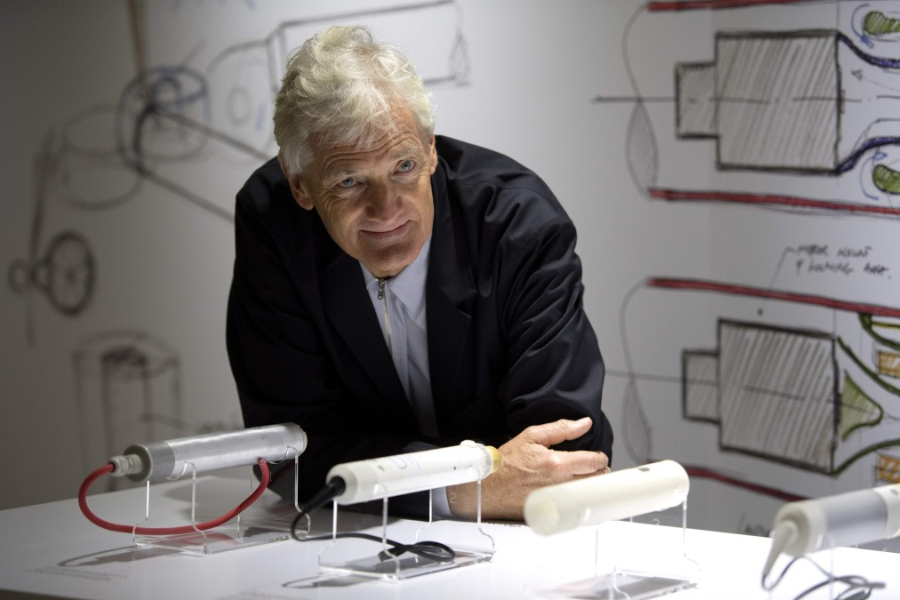
James Dyson’s relentless innovation and business acumen have made him one of the wealthiest individuals in the United Kingdom. His net worth is estimated at over £23 billion, placing him among the top of the UK rich list.
Yet, despite his immense wealth, Dyson lives a relatively private life. He owns several properties across England and abroad but continues to focus on his company’s mission rather than personal luxury. His wealth, as he often says, is a by-product of problem-solving, not the goal itself.
Philanthropy and Social Responsibility
Dyson is also a committed philanthropist. Through his foundation, he supports science education, medical research, and environmental innovation. He believes that empowering engineers can create lasting global change.
During the COVID-19 pandemic, Dyson redirected his company’s resources to design and produce ventilators to aid hospitals. This quick response demonstrated not only technical capability but also humanitarian commitment.
Criticism and Controversies
Despite his success, Dyson’s career has not been without criticism. His decision to relocate manufacturing to Asia drew backlash from those who viewed it as a move away from British production. Dyson argued that it was necessary to remain competitive globally while still keeping research and design in the UK.
In addition, his brief political involvement in Brexit discussions sparked public debate. However, Dyson has largely remained focused on innovation, avoiding prolonged engagement in politics.
Legacy and Influence
James Dyson’s legacy extends far beyond vacuum cleaners. He transformed the image of engineering from a dry, mechanical discipline into a creative, glamorous field. His work inspired countless designers, entrepreneurs, and students to pursue innovation fearlessly.
He has shown that failure is not the end — it’s part of the process. Dyson’s story of building over 5,000 prototypes before success has become a universal lesson in perseverance.
Today, Dyson continues to be a vocal advocate for British innovation and design excellence. His company invests heavily in robotics, AI, and sustainability, signaling a future where technology continues to improve the human experience.
Quotes That Define James Dyson
Throughout his career, Dyson has shared insights that reflect his mindset:
- “Enjoy failure and learn from it. You can never learn from success.”
- “I don’t believe in market research. People didn’t know they needed a vacuum cleaner without a bag until they saw one.”
- “The best kind of design is one that solves problems.”
These quotes reveal his belief in experimentation, courage, and independence — the same traits that fueled his journey from obscurity to global recognition.
The Future of Dyson Innovation
Looking ahead, Dyson continues to invest in new areas such as robotics, renewable energy, and smart home technology. His teams are developing AI-driven devices that adapt to user behavior and optimize performance automatically.
The company also plans to achieve sustainability goals by reducing plastic waste, using recyclable materials, and improving energy efficiency across all products. Dyson’s vision for the future is not just about gadgets — it’s about engineering a cleaner, smarter, and more sustainable world.
Conclusion
James Dyson’s life embodies the spirit of innovation. From struggling inventor to billionaire entrepreneur, his journey teaches us that success is built on patience, creativity, and the courage to challenge conventions. His inventions have changed the way millions of people clean, dry, and live — all because he refused to accept that “good enough” was good enough.




Post Comment