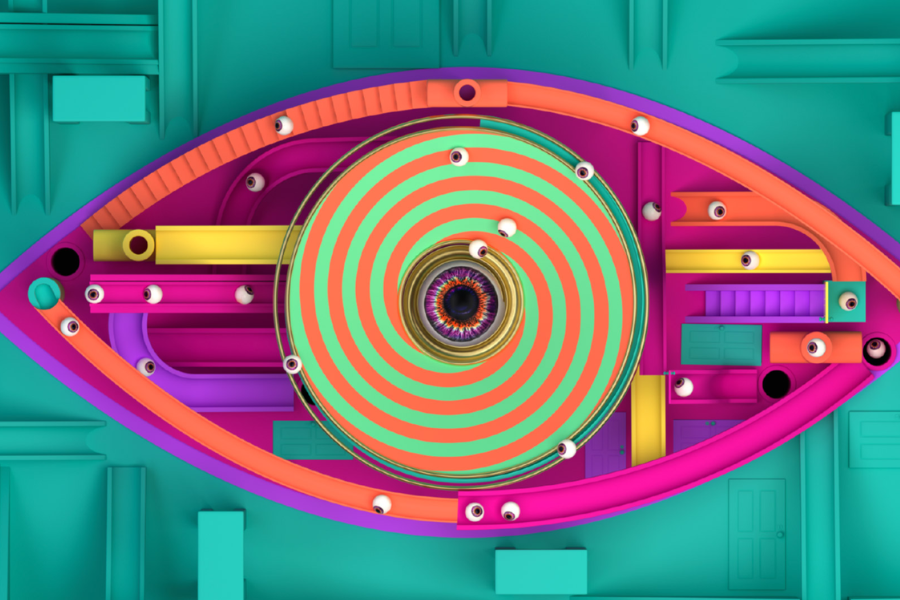
Big Brother 2025: The Evolution of Reality Television and the Power of Human Connection
Over the past 20 years, the television industry has undergone significant change, yet few programs have remained as popular and culturally significant as Big Brother. Fans all across the world are excitedly awaiting fresh turns, startling evictions, and unpredictable drama as Big Brother 2025 gets ready to rule screens once more. Beyond its entertainment value, however, Big Brother continues to reflect society by examining social dynamics, human psychology, and the impact of surveillance in the digital era.
This article explores the history, development, upcoming changes, and ongoing significance of Big Brother 2025’s “watching eyes” in a world increasingly dominated by social media and technology.
The Origins of Big Brother: A Revolutionary Concept

John de Mol and Endemol devised the Big Brother franchise, which debuted in the Netherlands in 1999. Its idea was remarkably straightforward but psychologically profound: put a group of strangers in a small house, block them off from the outside world, and record their every action around the clock.
George Orwell’s dystopian novel 1984, in which “Big Brother” represented ongoing government surveillance, served as the inspiration for the name. Paradoxically, what Orwell perceived as a horrifying oversight turned into a kind of public amusement.
Variations of Big Brother quickly proliferated throughout the United States, Canada, India, Australia, and the United Kingdom, each modifying the format to suit their own cultural situations.
Big Brother’s Evolution: From Social Experiment to Global Phenomenon
Big Brother evolved over time from a social experiment to a multimedia conglomerate. The novelty of isolation and observation—how common people responded when deprived of communication and privacy—was highlighted in the show’s early seasons.
Producers started including intricate challenges, twists, and competitions as technology developed and audience expectations shifted. Contestants had to strike a balance between tactical trickery and social ties as the show evolved into a game of strategy, manipulation, and survival.
The franchise has grown into a huge international spectacle by the 2010s, with spin-offs centred on influencers or couples as well as celebrity editions and internet streaming.
In 2025, Big Brother continues to push boundaries, embracing AI-driven monitoring, interactive audience voting, and social media integration, redefining how viewers participate in real-time decision-making.
What Makes Big Brother 2025 Different?

Big Brother 2025’s next season is expected to feature ground-breaking technologies. Several trends are anticipated across the franchise, even though each version (UK, USA, and other international editions) will have its own distinct flavour:
a. AI and Smart Surveillance
Producers are rumored to be using artificial intelligence to analyze contestant emotions, predict alliances, and enhance storytelling. This digital layer mirrors real-world concerns about privacy, echoing Orwell’s original message — who’s really watching whom?
b. The Eco House Concept
Sustainability has become a global priority, and Big Brother 2025 reflects this shift. Reports suggest that the house will feature renewable energy sources, eco-friendly materials, and tasks centered around environmental challenges — blending entertainment with education.
c. Cross-Platform Integration
Fans will no longer be passive spectators. With real-time polls, online voting, and social media influence, viewers can shape the game’s direction. This digital interactivity gives audiences unprecedented power over house dynamics.
d. Diverse and Inclusive Casting
Big Brother 2025 aims for inclusivity, representing various backgrounds, cultures, and identities. The show’s producers emphasize real representation — creating an authentic social experiment that mirrors modern society’s diversity.
The Psychology Behind Big Brother
What makes millions tune in every season? Beyond the competitions and drama, Big Brother offers an unparalleled psychological window into human behavior.
Contestants are placed in an environment where trust, deceit, competition, and intimacy intertwine. The house becomes a pressure cooker for emotions — revealing how people act when constantly observed and strategically cornered.
Psychologists often describe Big Brother as a living laboratory, where viewers witness the balance between authenticity and performance. Every gesture can be interpreted, every alliance questioned, and every emotion magnified under the cameras.
Interestingly, the contestants’ self-awareness of being watched influences their behavior — a concept known as the Hawthorne Effect. In Big Brother 2025, with advanced surveillance tools and fan interactivity, this psychological layer will likely become even more complex.
Big Brother and the Age of Social Media
Social media was still very new when Big Brother debuted in the early 2000s. These days, public interaction with reality stars has been transformed by platforms like TikTok, Instagram, and X (previously Twitter).
Big Brother participants in 2025 enter the house aware that their behaviour would become viral online in a matter of minutes. Memes proliferate like wildfire, fan accounts analyse every discussion, and online groups develop around favourite players.
A meta-level of strategy is added by this digital setting: players are performing for millions of online viewers in addition to their fellow residents. Votes, sponsorships, and future chances may be impacted by their popularity outside the house.
Big Brother 2025 thus represents more than simply reality TV; it also represents the reality of contemporary fame, which is instantaneous, viral, and frequently harsh.
Cultural Impact: What Big Brother Tells Us About Ourselves

Big Brother has always reflected the evolving values of society. It investigated media curiosity and voyeurism in the early 2000s. It developed into a forum for discussions about gender, identity, and diversity in the 2010s.
Big Brother 2025 now ushers in a time characterised by social consciousness, technology, and the hazy boundaries between performance and sincerity. It compels viewers to consider how they relate to judgement and privacy.
We examine our own nature—our sympathies, prejudices, and fascination with human imperfection—when we witness candidates battle, bond, or betray one another.
In a way, Big Brother is a mirror held up to humanity rather than merely a game show.
The Role of Strategy and Game Mechanics
Big Brother’s plot is driven by people and emotions, yet strategy is still at its core.
Players have to manage their public image while navigating nominations, alliances, and competitions. The most successful competitors mix strategic timing with social acumen, forming friendships when needed and betraying them when doing so will help them survive.
New game twists are introduced in Big Brother 2025 with the intention of upsetting predictability. It is anticipated that “secret rooms,” “power plays,” and “digital challenges” will assess flexibility and inventiveness.
The unpredictable nature of the game—one poor decision may instantly transform a beloved character into a villain—is what makes it so beautiful.
Behind the Cameras: Production and Ethics
There will always be ethical concerns with round-the-clock surveillance. To what extent do contestants actually have privacy? What is the impact of continuous observation on mental health?
In recent years, producers have imposed more stringent mental health policies, such as post-show therapy, counselling support, and psychological screening. These initiatives are allegedly more extensive than ever in Big Brother 2025, recognising the psychological cost of seclusion and surveillance.
In addition, the production staff continues to struggle with responsible editing. Because everyday footage is reduced into highlight episodes, editing decisions have the potential to influence public opinion, which raises concerns about narrative bias and manipulation.
The Global Big Brother Community
Big Brother has created a worldwide fan culture outside of television. Online communities discuss contestants’ morality, forecast alliances, and analyse game theories. Some viewers have been watching the show for decades, viewing each season as a changing example of how people behave.
That desire is rekindled by Big Brother 2025. A sense of communal participation is fostered via fan forums, podcasts, and live-tweeting events, which turn viewers from passive spectators into an engaged community.
The Legacy of Big Brother: Two Decades of Influence
Few television programs have had such a lasting impact. Numerous reality shows, such as Survivor, Love Island, The Circle, and Too Hot to Handle, were influenced by Big Brother.
It gave rise to a generation of reality stars and influencers by introducing the idea of unscripted authenticity. However, Big Brother’s formula—people, isolation, and observation—remains timeless even in an era full of content.
The show’s enduring popularity demonstrates that viewers never grow weary of witnessing real-time human dynamics. Big Brother embodies the essence of storytelling through real lives, whether it is about love, rivalry, or redemption.
The Future of Reality Television After 2025
Big Brother 2025 might be a watershed in the history of reality TV. The distinction between viewer and participant will become increasingly hazy with the advent of virtual reality, AI-driven storytelling, and immersive audience engagement.
Future iterations might incorporate metaverse-based competitions, holographic hosts, or virtual competitors. However, despite all the technological advancements, the core of Big Brother will always be the same: individuals imprisoned together, negotiating truth and trust while being watched by a camera.
Final Thoughts: Why Big Brother Still Matters in 2025
Big Brother 2025 is refreshingly unvarnished in a world that is fixated with filters, carefully chosen photos, and algorithmic stardom. It serves as a reminder of something very human: the need to interact, compete, and be accepted for who we really are.
Despite their ubiquitous presence, the cameras are able to record moments of courage, sadness, and sincere laughter. Each season narrates a tale of fortitude, compassion, and the precarious equilibrium between strategy and honesty.
One thing is certain as Big Brother 2025 develops: it’s more than a television program. In a time when everyone lives under the watchful eye of a digital “Big Brother,” whether voluntarily or not, it serves as a mirror reflecting our shared identity.



Post Comment