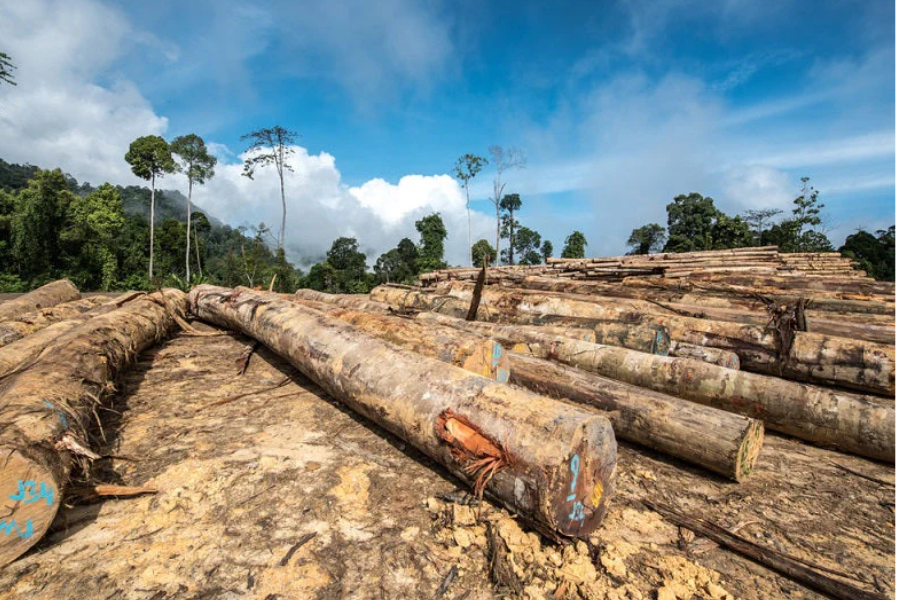
Deforestation: Reasons, Effects, and the Worldwide Battle to Preserve Our Forests
Deforestation is one of the most significant environmental concerns of the 21st century—a crisis that silently unfolds across continents but bears implications felt by the entire planet. Forests are more than just groups of trees; they are dynamic ecosystems that sustain millions of species, control the temperature, and support the livelihoods of about 1.6 billion people. However, forests are disappearing at a startling rate despite their enormous significance. Human activities including mining, logging, agriculture, and urbanisation cause millions of hectares to disappear annually.
This comprehensive essay explains what deforestation is, why it occurs, how it damages the environment, and what individuals, communities, and governments can do to prevent it. We can see how urgent it is to save forests and maintain the natural equilibrium that supports life if we have a better knowledge of this worldwide problem.
Introduction

The extensive removal, clearing, or destruction of forests or forested areas is referred to as deforestation. It happens when trees are felled and the land is put to non-forest uses like building or farming. Human-caused deforestation frequently leaves the area permanently damaged and unable to regenerate without human intervention, in contrast to natural disasters like storms or wildfires.
In the past, forests made up around 60% of the planet’s land area. They now only cover around 30%. Ecosystems that took centuries to build are permanently lost in many areas because the rate of destruction exceeds the rate of natural recovery.
A Brief History of Deforestation

Deforestation is not a recent issue, despite a sharp increase in recent decades. Forests have been cleared by people for thousands of years in order to produce food, construct shelter, and advance civilisations. Deforestation was a problem for ancient societies like Mesopotamia, Rome, and Greece long before there were industrial machines.
But in the modern era, the scale underwent a significant alteration. Global trade, commercial agriculture, mechanised logging, and population growth all increased the strain on forests. Some of the fastest and most damaging clearance in history has occurred in areas like the Amazon Basin, Southeast Asia, and Central Africa.
Major Causes of Deforestation
Deforestation is caused by a confluence of political, social, and economic factors rather than a single cause. The most important drivers are as follows:
Agricultural Expansion
The primary source of deforestation in the globe is agriculture. Forests are cut down to make way for farms as the world’s need for food, cattle, and cash crops grows.
Subsistence Farming
In many developing nations, small farmers cut down trees to grow food for survival. Although small-scale, the cumulative effect is large.
Commercial Agriculture
Major commodities responsible for forest loss include:
- Soybean farming
- Palm oil plantations
- Cattle ranching
- Sugarcane and maize production
Brazil’s Amazon rainforest, for example, has lost millions of hectares primarily due to cattle ranching and soybean cultivation.
Logging—Legal and Illegal
Timber is a valuable global commodity used for:
- Furniture
- Construction
- Paper
- Fuel
While some logging is regulated, illegal logging accounts for up to 30% of global timber trade. These activities degrade ecosystems, open access roads into untouched forests, and lead to further clearing.
Urbanization and Infrastructure Development

Cities grow as populations do. Large tracts of forest land are consumed by roads, residences, business districts, and industrial developments. Highways, dams, and mining activities are examples of infrastructure that serve as gateways to expedite further clearing.
Mining and Resource Extraction
Cities grow as populations do. Large tracts of forest land are consumed by roads, residences, business districts, and industrial developments. Highways, dams, and mining activities are examples of infrastructure that serve as gateways to expedite further clearing.
Climate-Driven Events
While human activity is the main driver, climate change also contributes indirectly. More frequent droughts and wildfires weaken forests, making them more vulnerable to future clearing.
Consequences of Deforestation
The impact of deforestation extends far beyond the physical loss of trees. It affects climate stability, biodiversity, water resources, and human health. Below are the most significant consequences:
Loss of Biodiversity
Forests are home to 80% of the world’s terrestrial wildlife, including countless species that scientists have yet to discover. When habitats disappear:
- Animal populations decline
- Species go extinct
- Ecosystems collapse
The Amazon rainforest alone hosts more than 3 million species. Clearing even a small portion disrupts delicate ecological relationships that took ages to form.
Climate Change Acceleration
Trees absorb carbon dioxide (CO₂) from the atmosphere. When forests are destroyed:
- Stored carbon is released into the air
- Less CO₂ is absorbed in the future
- Global warming accelerates
Deforestation accounts for nearly 10–15% of global carbon emissions, making it one of the biggest contributors to climate change.
Soil Erosion and Land Degradation
Tree roots stabilize soil and prevent erosion. Without forests:
- Topsoil washes away
- Land becomes barren
- Farming becomes difficult
- Rivers fill with sediment
In regions like Haiti, intensive deforestation has left hillsides vulnerable to landslides and flooding.
Global Hotspots of Deforestation
Deforestation does not occur equally across the globe. Some areas are under greater threat due to economic demand and weak environmental protections.
The Amazon Rainforest
Often referred to as the “lungs of the planet,” the Amazon experiences massive clearing primarily for cattle ranching and soy farming.
Central Africa
The Congo Basin faces pressure from logging, mining, and charcoal production
Southeast Asia
Countries like Indonesia and Malaysia have lost millions of hectares to palm oil plantations and timber companies.
North America and Europe
Although these regions are better regulated, urban expansion and industrial timber harvesting still cause forest loss.
Efforts to Combat Deforestation
Stopping deforestation requires cooperation across governments, industries, communities, and individuals. Here are some key strategies already underway:
Strengthening Government Policies
Effective policies include:
- Strict logging regulations
- Protected forests and national parks
- Penalties for illegal logging
- Support for indigenous land rights
Brazil’s enforcement of environmental laws temporarily reduced Amazon deforestation in the 2010s before policies weakened again.
Promoting Sustainable Agriculture
Techniques such as:
- Agroforestry
- Crop rotation
- Precision farming
help farmers grow food without expanding into forests.
Global Market Pressure
Consumers and companies play a major role. Avoiding products linked to deforestation, such as unsustainable palm oil, soy, beef, and timber, reduces demand for destructive practices.
Technology and Satellite Monitoring
Modern tools help governments detect illegal clearing in real time. Drones, satellite imaging, and AI-based mapping are revolutionizing forest protection.
The Role of Local Communities and Indigenous Peoples
Indigenous communities have safeguarded forests for centuries. Research indicates that forests under indigenous management frequently have lower rates of deforestation than regions under government control. Their expertise in wildlife, biodiversity, and land stewardship is priceless.
Empowering local communities through land rights, financial support, and environmental education is essential for long-term conservation.
Future Outlook: Can Deforestation Be Stopped?
It is difficult but not impossible to stop deforestation entirely. Stricter regulations, increased awareness, and better conservation initiatives are already demonstrating improvement in several nations. But the rate of devastation continues to outpace that of rehabilitation.
Conclusion
The loss of ecosystems, wildlife, climate stability, and human heritage are all consequences of deforestation. The causes are complicated, but there are workable answers. A healthier, more sustainable earth is the prize for saving forests, which calls for both local and global action.
Life depends on the preservation of forests, which are the lungs of the planet. In addition to being an environmental obligation, protecting them is also a moral obligation to future generations.





Post Comment