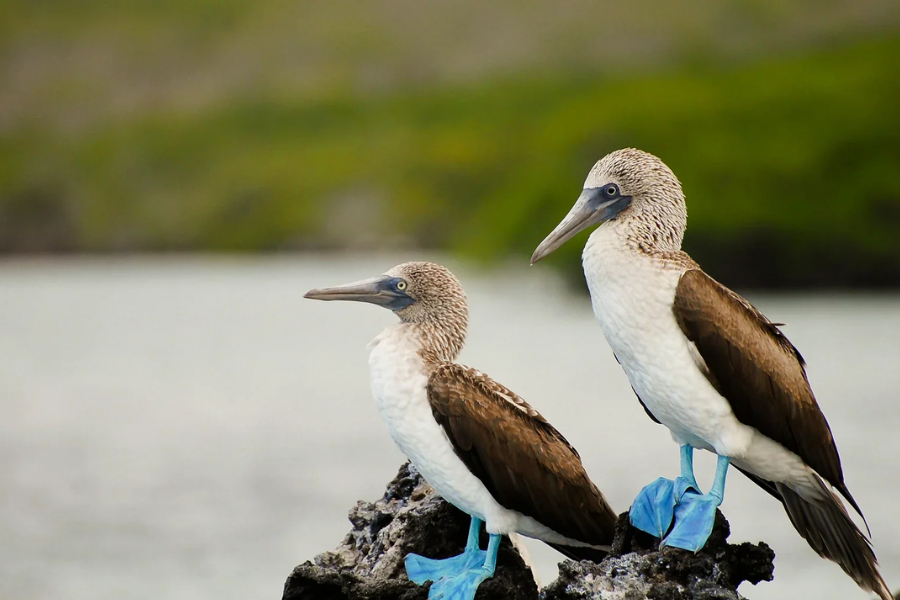
Blue-Footed Booby: Nature’s Iconic Seabird
The Blue-Footed Booby (Sula nebouxii) is one of the most remarkable and recognizable seabirds in the world, instantly identifiable by its vibrant blue feet. Native to the tropical and subtropical regions of the Pacific Ocean, these birds are famous not only for their striking appearance but also for their fascinating behavior, unique mating rituals, and ecological significance. In this article, we will explore the life, habitat, diet, mating habits, conservation status, and cultural impact of the Blue-Footed Booby, offering a comprehensive look at one of nature’s most intriguing creatures.
Physical Characteristics of the Blue-Footed Booby
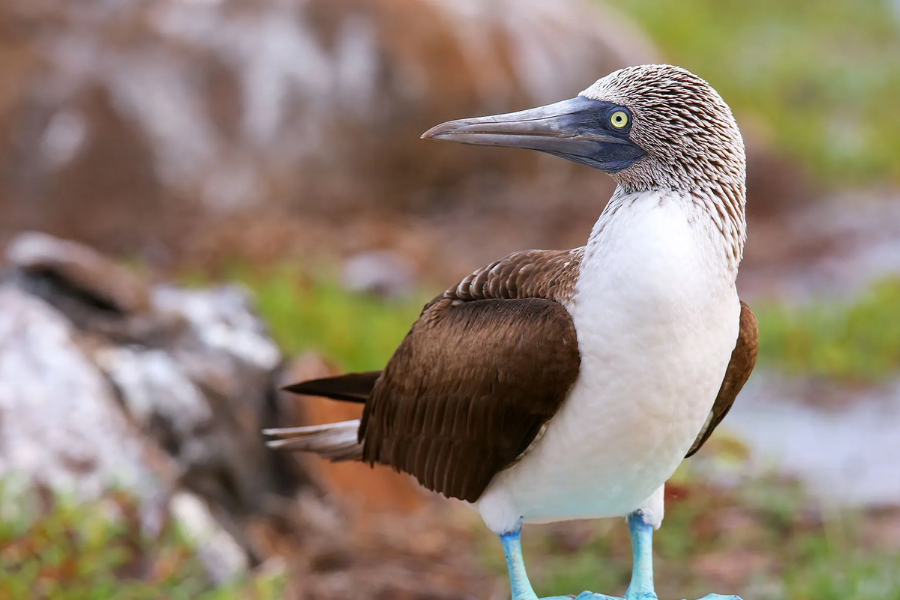
The Blue-Footed Booby is named for its bright turquoise-blue feet, which play a central role in courtship displays and mate selection. The intensity of the blue coloration is an indicator of the bird’s health and vitality, with brighter feet signaling a more desirable mate.
These birds typically measure 32 to 34 inches in length, with a wingspan of approximately 5 feet. Their bodies are streamlined, perfectly adapted for diving and swimming. Blue-Footed Boobies have a white underside with a chestnut-brown back, and their sharp, pointed beaks are ideal for catching fish. Their eyes are pale yellow, giving them an alert and keen appearance, essential for spotting prey in the open ocean.
Interestingly, juvenile Blue-Footed Boobies have grayish feet, which gradually turn blue as they mature, signaling sexual maturity. Males tend to have slightly brighter feet than females, and this color plays a crucial role in their complex mating rituals.
Habitat and Distribution
Blue-Footed Boobies are native to the eastern Pacific Ocean, with the Galápagos Islands being one of their most famous habitats. They can also be found along the coasts of Ecuador, Peru, and Mexico, as well as the islands off the western coast of Central America.
These seabirds favor rocky coasts, cliffs, and islands where they can easily nest and access rich fishing grounds. Their habitat choice allows them to remain relatively safe from predators while maintaining proximity to abundant food sources. The Galápagos Islands, in particular, offer an ideal environment with minimal human disturbance, making it a critical region for the species’ survival and observation.
Diet and Hunting Behavior
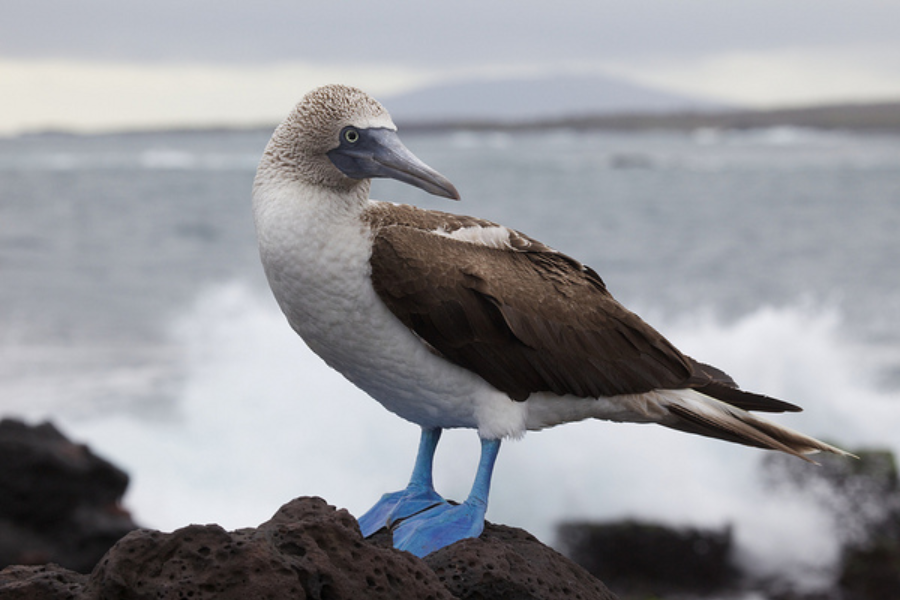
The Blue-Footed Booby is a skilled predator, feeding primarily on fish such as sardines, anchovies, mackerel, and flying fish. They are known for their remarkable hunting technique: the birds spot prey from the air and perform dramatic plunge dives into the ocean at speeds of up to 60 miles per hour. Their streamlined bodies and strong, pointed beaks allow them to penetrate the water with minimal splash, efficiently capturing fish.
Unlike some other seabirds, Blue-Footed Boobies hunt alone or in small groups, relying on their excellent vision to locate schools of fish. They are also capable of holding their breath underwater, allowing them to chase fish beneath the surface. After a successful dive, they resurface, shake off the water, and swallow their catch whole.
Mating and Reproduction
One of the most fascinating aspects of the Blue-Footed Booby is its elaborate courtship ritual. The birds perform a complex mating dance, which involves:
- High-stepping to show off their blue feet.
- Wing spreading to appear larger and more attractive.
- Sky-pointing, where they stretch their necks and beaks upward while vocalizing calls to communicate interest.
These displays are critical in mate selection, as the color and movement of the feet play a direct role in signaling health and genetic fitness. The brighter the feet, the more likely a bird is to secure a mate.
Blue-Footed Boobies are monogamous for a breeding season, and some pairs may remain together for multiple seasons. After mating, the female lays one to three eggs in a shallow nest, often directly on the ground. Both parents participate in incubation, taking turns to keep the eggs warm for around 41 to 45 days. Once hatched, the chicks are cared for diligently, with both parents providing food until they fledge, usually around three months old.
Behavior and Social Structure

Blue-Footed Boobies are social birds, often nesting in large colonies. While they spend much of their time hunting alone, their social interactions are highly structured. They engage in ritualized displays not only for courtship but also to establish territories within the colony.
These birds are highly adaptable, capable of flying long distances to find food while returning to the same nesting sites season after season. Their social behavior ensures both protection from predators and successful reproduction.
Predators and Threats
Adult Blue-Footed Boobies have few natural predators due to their agility, flight capabilities, and nesting in remote islands. However, eggs and chicks are vulnerable to predators such as:
- Rats
- Feral cats
- Large birds of prey
Additionally, human activities, including habitat disturbance and pollution, pose significant threats to their populations. Climate change and overfishing also affect their food availability, indirectly impacting their survival.
Conservation Status
Currently, the Blue-Footed Booby is not considered endangered, and populations are relatively stable. However, conservationists emphasize the need for ongoing protection, particularly in areas vulnerable to human interference. Organizations in the Galápagos and along the Pacific coast monitor nesting colonies, regulate tourism, and implement programs to control invasive species.
Sustainable fishing practices are also critical, as depletion of fish stocks could threaten the Blue-Footed Booby’s food supply. Maintaining clean oceans and protecting nesting habitats are essential for ensuring the species’ continued survival.
Cultural and Scientific Significance
The Blue-Footed Booby has captured the attention of scientists, tourists, and nature enthusiasts alike. Its bright blue feet, entertaining mating dances, and unique behaviors make it a favorite subject for wildlife documentaries and photography.
In the Galápagos Islands, the bird is a symbol of the islands’ unique biodiversity. Researchers have used Blue-Footed Boobies to study sexual selection, parental care, and population dynamics. Observations of their courtship and reproductive success have provided invaluable insights into evolutionary biology and behavioral ecology.
Fun Facts About Blue-Footed Boobies
- Their name “booby” comes from the Spanish word “bobo,” meaning foolish or clown, due to their clumsy movement on land.
- Despite their awkward land movements, they are expert swimmers and divers, highly efficient in catching fish.
- Foot color directly influences mate choice—duller feet are often a sign of poor health or nutritional deficiency.
- Chicks exhibit siblicide, where the older chick may push younger siblings out of the nest to reduce competition for food.
- Blue-Footed Boobies can live up to 17 years in the wild.
Observing Blue-Footed Boobies
Tourists visiting the Galápagos Islands often flock to sites where Blue-Footed Boobies nest. Viewing these birds in their natural habitat offers a rare glimpse into their fascinating behaviors, from fishing dives to courtship dances. Ecotourism programs in these regions emphasize responsible wildlife observation, ensuring minimal disturbance to the birds and their nesting grounds.
Conclusion
The Blue-Footed Booby is more than just a seabird with striking feet. Its ecological role as a predator, its intricate mating rituals, and its adaptability to harsh coastal environments highlight the incredible diversity of life in the Pacific Ocean. Protecting these birds ensures the preservation of the rich marine ecosystems they inhabit, while offering humans a chance to witness one of nature’s most charismatic creatures.
From the shimmering blue feet that dazzle observers to the aerial acrobatics performed during dives, the Blue-Footed Booby continues to fascinate scientists and bird enthusiasts alike. Understanding and conserving this unique seabird is essential, not only for its survival but also for maintaining the health of the oceans and the beauty of our planet’s biodiversity.\
Frequently Asked Questions (FAQs)
What is a Blue-Footed Booby?
A: The Blue-Footed Booby (Sula nebouxii) is a seabird native to the eastern Pacific Ocean, easily recognized by its vibrant blue feet and striking courtship dances.
Where can Blue-Footed Boobies be found?
A: They are primarily found in the Galápagos Islands, along the coasts of Ecuador, Peru, Mexico, and other tropical and subtropical Pacific islands.
Why are their feet blue?
A: The blue coloration of their feet indicates health and fitness. Brighter feet signal a stronger, healthier mate, which plays a crucial role in mating rituals.
What do Blue-Footed Boobies eat?
A: Their diet mainly consists of fish such as sardines, anchovies, mackerel, and flying fish. They are expert divers, plunging into the ocean to catch prey.
How do they mate?
A: Blue-Footed Boobies perform elaborate courtship dances that include high-stepping, wing spreading, and sky-pointing. Foot color is a key factor in mate selection.
How long do they live?
A: In the wild, Blue-Footed Boobies can live up to 17 years, depending on environmental conditions and availability of food.
Are Blue-Footed Boobies endangered?
A: Currently, they are not considered endangered, and their populations are stable, but habitat disturbance and overfishing could pose future threats.
What makes them unique among seabirds?
A: Their bright blue feet, entertaining courtship rituals, and exceptional diving skills make them one of the most unique and recognizable seabirds in the world.
Can tourists see Blue-Footed Boobies in the wild?
A: Yes, ecotourism in the Galápagos Islands provides opportunities to observe Blue-Footed Boobies in their natural habitat, while responsible tours ensure minimal disturbance.
Why are they important for the ecosystem?
A: Blue-Footed Boobies are top predators in their marine environments, helping maintain fish populations and ecological balance in the tropical Pacific Ocean.





Post Comment