
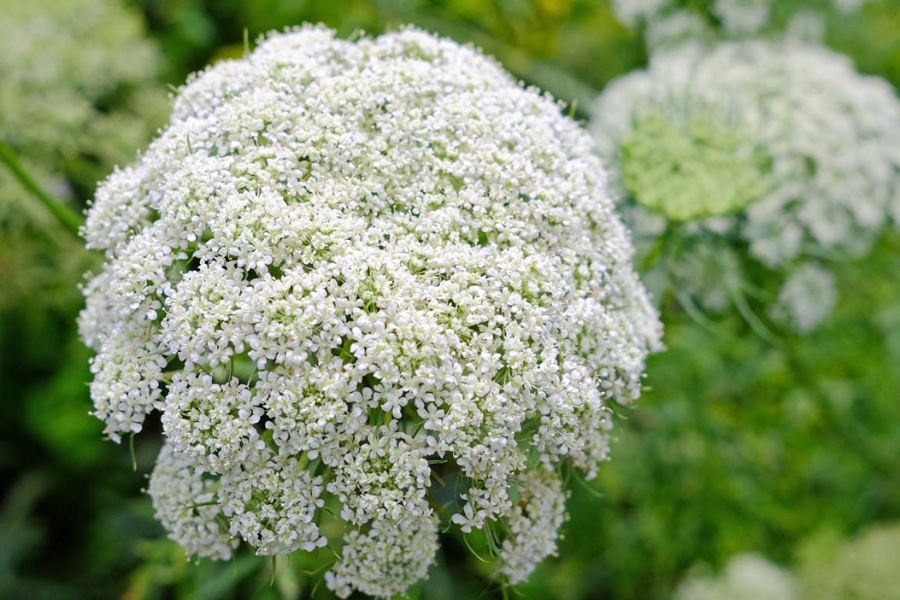
Queen Anne’s Lace: The Timeless Beauty and Symbolism of a Wildflower
Few blossoms in the world of wildflowers possess the same combination of elegance, legend, and mystery as Queen Anne’s Lace. This exquisite white flower, formally called as Daucus carota, is commonly found in gardens, meadows, and along roadsides throughout Europe and North America. Despite its fragile appearance, Queen Anne’s Lace is a resilient plant with deep historical roots and a fascinating story that stretches back centuries.
The history, botany, and symbolism of Queen Anne’s lace, as well as its applications in medicine, gardening, and contemporary culture, will all be discussed in this article.
The Origins and History of Queen Anne’s Lace
Queen Anne’s Lace has a long and storied history. Actually, the plant is a wild relative of the modern carrot (Daucus carota subsp. sativus). It was originally native to Europe and parts of Asia but has since spread across the world, particularly thriving in the United Kingdom and North America.
A well-known English legend is the source of the name “Queen Anne’s Lace.” According to one version, Queen Anne of England (believed to be either Queen Anne of Great Britain or Queen Anne of Denmark) was challenged by her friends to create lace as beautiful as the flower’s intricate white blooms. While sewing, she pricked her finger, and a single drop of blood fell onto the lace — represented by the tiny purple or dark red flower often found at the center of the Queen Anne’s Lace blossom.
The romantic name of the flower was inspired by this story, which forever linked it to concepts of grace, femininity, and craftsmanship.
Botanical Description: Nature’s Lacework

Queen Anne’s Lace belongs to the Apiaceae family, which includes familiar plants such as parsley, dill, and celery. The plant can reach up to four feet in height and features fern-like, feathery leaves and an umbrella-shaped cluster of small white flowers known as an umbel.
Each umbel is made up of hundreds of tiny blooms that together create a lace-like pattern — a natural masterpiece that looks almost handwoven. The flower’s center occasionally contains a small, purple floret that is referred to as the “drop of blood” in the Queen Anne legend. The taproot of Queen Anne’s Lace is pale, slender, and smells faintly of carrots — hence its other common name, “Wild Carrot.” However, in contrast to the modern-day cultivated carrot, the bitter and woody root of the wild variety renders it unfit for daily consumption.
Habitat and Growth Conditions
There is a lot of Queen Anne’s lace growing in fields, meadows, and along country roads. It prefers well-drained soils and full sunlight, thriving in temperate climates.
In the UK, it typically blooms from June to September, covering the countryside with clusters of white lace-like blossoms that sway gently in the summer breeze. Because the plant easily self-seeds, it can spread naturally without much human intervention. Queen Anne’s Lace is admired by gardeners for its durability and low upkeep. It is common in natural wildflower gardens due to its ability to thrive in poor soils where many other plants struggle.
Symbolism and Cultural Significance
Throughout history, Queen Anne’s Lace has carried deep symbolism in art, literature, and folklore.
- Elegance and Femininity – The flower’s delicate structure and association with lace make it a symbol of grace and refinement.
- Sacrifice and Devotion – The legend of Queen Anne pricking her finger gives the flower a meaning tied to love and self-sacrifice.
- Protection and Purity – In old English traditions, it was believed to ward off evil and symbolize innocence.
In the Victorian language of flowers, Queen Anne’s Lace was used to express “sanctuary” or “delicate femininity.” Its light, airy blossoms were often added to romantic bouquets and wreaths.
Today, the flower continues to inspire poets, artists, and designers. Many wedding floral arrangements include Queen Anne’s Lace to add an element of vintage beauty and symbolism of everlasting love.
Medicinal and Herbal Uses
Traditional herbal medicine has utilized Queen Anne’s lace for a very long time. Ancient healers recognized its therapeutic potential in a variety of ways. Historically, the seeds were used as a natural diuretic, helping to cleanse the kidneys and reduce water retention. Additionally, herbalists believed that the plant could aid in digestion and reduce bloating. Seeds of Queen Anne’s lace were even used as a natural contraceptive in the Middle Ages. Women would chew the seeds after intercourse as a folk method of preventing pregnancy — a practice mentioned by ancient Greek physician Hippocrates.
Modern science, on the other hand, advises caution because the plant’s seeds can be toxic in large quantities and should not be used for medicinal purposes without professional supervision.
Differentiating Queen Anne’s Lace from Poison Hemlock
One of the most important things to know about Queen Anne’s Lace is how to distinguish it from its deadly lookalike — Poison Hemlock (Conium maculatum).
Both plants belong to the carrot family and share similar umbrella-shaped clusters of small white flowers, but there are clear differences:
| Feature | Queen Anne’s Lace | Poison Hemlock |
| Stem | Hairy and green | Smooth and purple-spotted |
| Smell | Pleasant, carrot-like scent | Foul, musty odor |
| Flower Center | Often has a purple floret | Pure white, no center color |
| Leaves | Fine, feathery | Shiny, broader, and darker green |
Accidental ingestion of Poison Hemlock can be fatal, so it’s essential to identify these plants correctly before foraging or handling them.
Queen Anne’s Lace in Modern Gardening
Today, Queen Anne’s Lace is loved by gardeners who appreciate naturalistic and cottage-style landscapes. It pairs beautifully with other wildflowers such as cornflowers, poppies, and daisies.
Its airy, lace-like blooms add texture and height to borders, while its long stems make it a favorite for floral arrangements. The dried flowers also retain their form and are often used in rustic or bohemian decor.
Moreover, Queen Anne’s Lace is known to attract pollinators — especially bees, butterflies, and beneficial insects — making it a valuable addition to eco-friendly gardens.
However, because it self-seeds so easily, it can become invasive if not managed. Gardeners often trim spent flowers before they seed to control spreading.
Culinary and Edible Aspects
Though Queen Anne’s Lace is a wild relative of the carrot, it is not commonly eaten due to its tough root and potential confusion with poisonous plants.
That said, young roots of first-year plants (before flowering) can be mildly edible if properly identified. They have a faint carrot flavor but lack sweetness. Additionally, the flowers and leaves can be used sparingly as herbal garnishes or in infused cocktail syrups. Still, one must always be cautious, as improper identification can lead to severe poisoning if mistaken for hemlock.
Artistic and Literary Influence
The beauty of Queen Anne’s Lace has not gone unnoticed in the world of art and literature. It has been a muse for poets, painters, and photographers alike.
In his well-known poem titled “Queen Anne’s Lace,” American poet William Carlos Williams compared the whiteness of the flower to purity and sensual beauty. Artists have captured it in still-life paintings and botanical illustrations, appreciating its fragile intricacy.
The flower’s lace-like pattern frequently serves as inspiration for fabric motifs, wallpaper, and wedding decor in contemporary design, maintaining its status as a symbol of timeless beauty.
Ecological Importance

Beyond aesthetics, Queen Anne’s Lace plays an important role in supporting biodiversity. It serves as a host plant for the Eastern Black Swallowtail butterfly, whose caterpillars feed on its leaves.
Its blossoms attract numerous pollinators, making it a valuable part of the natural ecosystem. In rural landscapes, its presence contributes to soil health and helps prevent erosion by stabilizing loose ground.
Queen Anne’s Lace in the UK: A Familiar Summer Sight
In the United Kingdom, Queen Anne’s Lace — also known locally as “Wild Carrot” — is a beloved part of the countryside.
During late spring and summer, fields and road edges become a sea of delicate white blooms, creating one of the most picturesque seasonal displays in rural Britain.
It has also become a symbol of natural heritage, representing the unspoiled charm of the English countryside. Conservation groups encourage its protection as part of wildflower meadow restoration projects, promoting biodiversity and sustainable land use.
Folklore and Superstitions
Folklore surrounding Queen Anne’s Lace adds to its mystical charm. People believed that the flower could predict love and fortune in ancient times. True love is represented by a flower that remains white after being picked, while heartbreak is represented by a flower that quickly wilts. In some regions, Queen Anne’s Lace was thought to ward off evil spirits or bring good luck when carried in a pocket or woven into hair.
Because of these beliefs, it became more than just a wildflower; it became a symbol of protection, hope, and purity.
Preserving and Enjoying Queen Anne’s Lace
Those who wish to enjoy Queen Anne’s Lace beyond summer can dry the flowers for decorative purposes. The process is simple — hang the stems upside down in a dry, dark place until the petals become crisp.
Dried Queen Anne’s Lace retains its intricate form and can be used in floral wreaths, art projects, or as a natural home decor element.
The Enduring Allure of Queen Anne’s Lace
Queen Anne’s Lace embodies the beauty of simplicity and resilience. It’s a flower that asks for little yet offers much — grace, history, and a reminder of nature’s ability to create art without human intervention.
From its royal legend to its ecological value, the plant continues to enchant botanists, poets, and nature lovers alike.