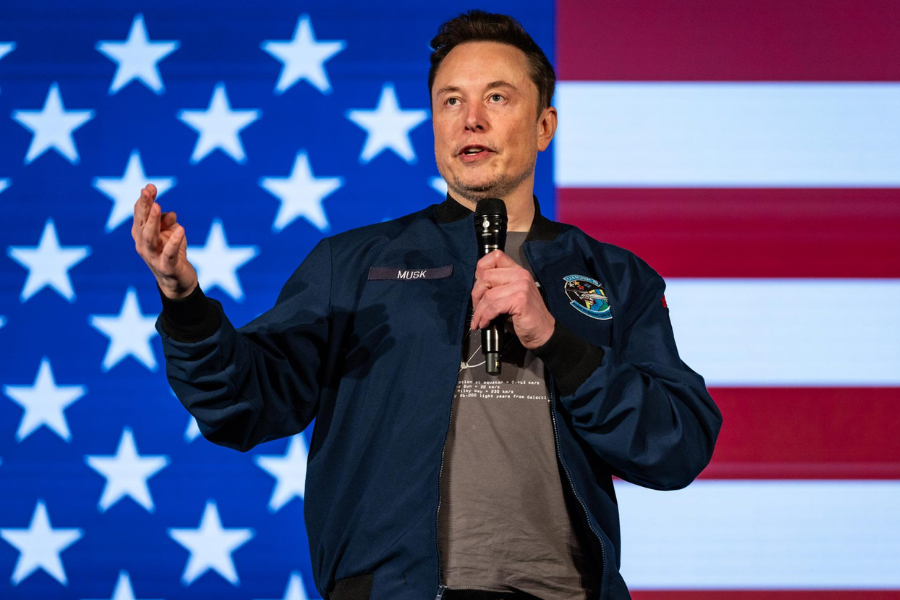
The Towering and Tenuous Empire: Decoding the Volatile Phenomenon of Elon Musk’s Net Worth
Elon Musk’s net worth is not just a number. It is a live, pulsing, and wildly volatile narrative—a financial drama that plays out on the public stage in real-time. To quote it as a static figure, like “$210 billion” or “$180 billion,” is to miss the point entirely. It is a high-altitude weather system, subject to the storms of market sentiment, Musk’s own unpredictable pronouncements, and the nascent, unproven technologies it is built upon. Understanding this figure requires moving beyond the billionaire rankings and delving into the unique, interconnected, and precarious architecture of his wealth.
Unlike traditional magnates whose fortunes are anchored in cash flows from oil, retail, or established software, Musk’s wealth is an edifice constructed almost entirely from equity in his companies. He takes little salary—Tesla’s famed $0 base pay for him is genuine—and holds relatively modest amounts of cash or liquid assets compared to his net worth. The tower is built on pillars of stock. The primary columns are Tesla, SpaceX, and, with increasing gravitational pull, X (formerly Twitter). The value of these pillars does not reflect traditional profitability so much as they embody future potential—a bet on a world transformed by electric vehicles, interplanetary travel, and a reinvented digital public square.
Tesla: The Bedrock and the Earthquake Zone

For years, Tesla has been the undisputed cornerstone. Musk’s roughly 13% stake (post various sales) means his personal fortune moves almost in lockstep with Tesla’s share price. This connection explains the extreme volatility. Tesla is valued not as a car company, but as a technology and energy disruptor. Its price-to-earnings ratio has historically been astronomical, pricing in decades of assumed dominance.
This makes it hypersensitive. A strong quarterly delivery report can add tens of billions to Musk’s worth in a day. A recall, a production bottleneck in Berlin or Austin, or a shift in EV subsidy policies can wipe it away just as quickly. More than anything, it is sensitive to Musk himself. His infamous “funding secured” tweet in 2018, leading to SEC sanctions, is a prime example of how his communication directly manipulates this core pillar. His recent focus on robotics and AI, while exciting to some investors, dilutes the automotive narrative and adds another layer of speculative uncertainty. Tesla’s value, and thus the foundation of his wealth, is a perpetual debate on future market share, profit margins in a competitive landscape, and the successful deployment of fully autonomous driving—a technology perpetually “a year away.”
SpaceX: The Dark Matter of the Fortune
If Tesla is the visible, turbulent bedrock, SpaceX is the dense, dark matter of Musk’s net worth—incredibly massive but largely invisible in public markets. Valued at over $180 billion in private funding rounds, SpaceX is arguably his most revolutionary company, having achieved a near-monopoly in reliable, cost-effective orbital launches with its reusable Falcon rockets. Its Starlink satellite internet constellation is a cash flow-generating asset with global reach, and its Starship program aims at nothing less than making humanity multi-planetary.
This private status creates a paradox. SpaceX’s valuation is assessed periodically by sophisticated investors like Fidelity or Google, but it doesn’t experience the daily panic or euphoria of the stock market. This provides stability. However, this value is also a consensus estimate, not a market price. A Starship test that ends in a dramatic explosion (framed by SpaceX as a “rapid unscheduled disassembly” and a learning opportunity) doesn’t immediately crater Musk’s net worth, though it may temper the next funding round’s valuation. The immense, steadying weight of SpaceX is what allows Musk’s overall net worth to remain stratospheric even when Tesla stumbles. It represents a belief in a monopoly on space infrastructure, a bet that is less contested daily but no less audacious.
The X Factor: Acquisition, Debt, and a Personal Albatross?
The $44 billion acquisition of Twitter, now X, introduced a radically new and perplexing element. To finance it, Musk didn’t just sell Tesla stock; he layered the social media platform itself with approximately $13 billion in debt. More critically, he used a significant portion of his Tesla shares as collateral for personal loans to help fund the deal.
This created a dangerous financial interlinkage. The health of X—a company that by all accounts has seen a significant drop in advertising revenue and is struggling to find a new monetization path—is now tethered to Tesla’s stock price. If Tesla’s share price were to fall severely, Musk could face margin calls on those loans, forcing him to sell more Tesla stock, which could depress the price further in a vicious cycle. X is no longer just a separate company; it is a potential destabilizer, an albatross that adds financial risk to the entire structure. While Musk claims to be transforming it into an “everything app” inspired by China’s WeChat, the current reality is that it represents a massive, highly leveraged bet that currently consumes cash and management attention. Its valuation is opaque, but most analysts believe it is worth far less than he paid, creating a massive, unrealized paper loss that isn’t fully reflected in his net worth calculations.
The Man as Chief Risk Officer
Any analysis of Musk’s wealth is incomplete without factoring in his own psyche as a central, high-risk asset. He is the ultimate “key man.” His vision and relentless drive built these companies. Investors buy into his execution capability. But his personality is also a systemic risk.
His penchant for provocative, sometimes legally questionable tweets can trigger regulatory action and shareholder lawsuits. His divisive political and social commentary can alienate the very customer base Tesla relies upon—progressive early adopters who champion sustainability. His management style, described as chaotic and demanding, can lead to top-tier executive turnover. Each of these personal actions sends shockwaves through Tesla’s stock price, and thus, his net worth. He is both the architect and the most likely source of tremors in his own financial empire.
The Illusion of Liquidity and the Meaning of It All
Finally, there is the critical concept of liquidity. Musk’s net worth is a theoretical number. He cannot simply press a button and access $200 billion. Selling such a massive block of Tesla stock would crash its price, as markets saw when he sold over $40 billion worth to fund the Twitter acquisition. A large portion of his SpaceX equity is even harder to liquidate quickly without potentially triggering clauses or needing board approval. His wealth is powerful, granting him unparalleled access to capital and influence, but it is not a bank account. It is a command over resources and future cash flows, not present cash.
So, what does Elon Musk’s net worth truly represent? It is a real-time, crowd-sourced valuation of a specific future. It is the market’s aggregated bet on:
- The total electrification of global transport led by Tesla.
- The privatization and commercialization of space access and colonization led by SpaceX.
- The successful transformation of a global social network into a financial and communications super-app under X.
- The continued, viable execution of all this by one famously over-extended, mercurial individual.
It is a figure that condenses extreme optimism about technology with a staggering tolerance for risk. It can swing by $20 billion in a week based on a quarterly earnings call or a viral tweet. This volatility is not a bug in the system; it is the core feature. Elon Musk’s net worth is the financial world’s most prominent and precarious monument to speculation on the future itself—a future he promises to build, one rocket launch, one electric car, and one controversial post at a time. Its eventual, stable value won’t be found on a billionaire leaderboard, but in the history books, which will judge whether the towering empire he built was made of steel or sand.
Elon Musk’s Net Worth

Elon Musk’s net worth is a volatile and fascinating figure, less a measure of liquid cash and more a real-time valuation of future ambitions. It is primarily a reflection of his ownership stakes in his flagship companies—Tesla, SpaceX, and X—whose values are tied to long-term, high-risk technological bets rather than stable, present-day profits. This structure makes his wealth incredibly sensitive to market sentiment, his own unpredictable public statements, and the perceived success or failure of projects like fully autonomous driving or the Starship rocket. Consequently, it can swing by tens of billions of dollars in a single week, embodying not just financial might but the market’s faith in one man’s vision to reshape transportation, space, and digital communication.
FAQs on Elon Musk’s Net Worth
Q: How much is Elon Musk worth?
A: As of [Note: It is best to specify “as of early 2025” or similar, as the number changes daily], estimates place his net worth between $180 billion and $220 billion, making him one of the wealthiest people in the world. However, this number is extremely fluid and can change dramatically within days based on Tesla’s stock price.
Q: Where does most of his money come from?
A: The vast majority comes from his ownership stakes in Tesla and SpaceX. Tesla’s publicly traded stock is the most visible driver of daily changes, while his stake in privately-held SpaceX forms a massive, steadying base of his wealth.
Q: Is his net worth in cash?
A: No, absolutely not. It is almost entirely “on paper,” tied up in the shares of his companies. Liquidating such a large amount would require selling stock, which would crash the price and he would not receive the full theoretical value. It represents control over assets and future potential, not a bank balance.
Q: Why does his net worth change so quickly?
A: Because a huge portion is in Tesla stock, which is famously volatile. The market constantly re-evaluates Tesla’s future prospects based on news, delivery numbers, tech developments, and Musk’s own tweets. A 5% move in Tesla’s share price can change his personal net worth by $8-10 billion in a single day.
How did buying Twitter (X) affect his wealth?
A: The $44 billion acquisition significantly increased his financial risk. He sold billions in Tesla stock to fund it and took on massive debt, using more Tesla shares as collateral. This leveraged his core asset (Tesla) to buy a company (X) that is currently struggling, creating a potential point of financial vulnerability.
Could he actually lose his billionaire status?
A: While a total collapse is highly unlikely due to the entrenched value of SpaceX, a “perfect storm” of Tesla’s value plummeting, SpaceX facing major setbacks, and margin calls on his loans for X could theoretically erase a massive portion of his wealth. His net worth is built on confidence, and a severe, sustained loss of market confidence could see it shrink precipitously.




Post Comment